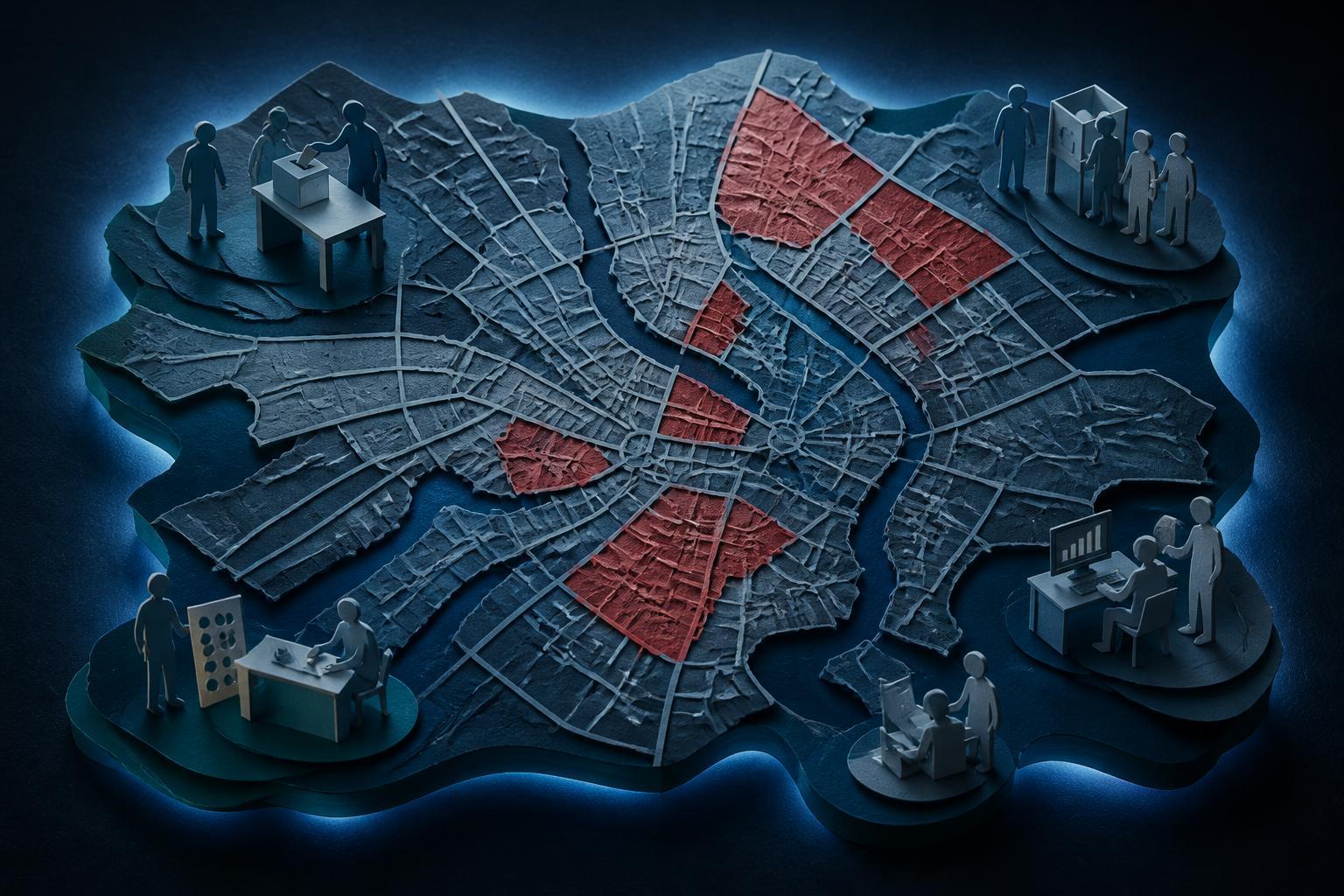
When North Carolina Ports shifted to manual operations this week after a cyberattack, it joined a growing list of critical infrastructure operators forced to revert to pen-and-paper processes. The incident, which affected facilities handling more than 4 million tons of cargo annually across Wilmington, Morehead City, and Charlotte, wasn't an isolated event. Ports in the U.S., Europe, and Asia have been repeatedly targeted by ransomware gangs over the last five years.
For GRC leaders responsible for operational technology environments, this incident isn't just another breach headline. It's a stress test of your contingency planning, a reminder that your OT estate is a strategic liability, and evidence that manual fallback procedures are now a core control, not a theoretical exercise.
What the NC Ports Incident Shows
The attack forced a complete shift to manual processing across all three port locations. While the breach was contained and recovery began, operations remained manual days later. Gates opened on schedule, but delays became the new normal. No group claimed responsibility, and officials haven't confirmed whether ransomware was involved.
What's significant: the ports had a contingency plan ready. They contacted state agencies and the U.S. Coast Guard immediately. An outside forensics team joined their IT department for assessment and restoration. The response followed standard incident protocols, yet operations still ground to a crawl.
This gap between "contained" and "recovered" is where your operational risk lives.
Key Findings for OT Security Programs
Finding 1: Manual fallback is now a primary control, not a backup plan
North Carolina Ports demonstrated functional business continuity by maintaining operations manually. Your team needs to test whether your manual processes actually work under pressure. Can your operators execute critical workflows without system access? Do they have current documentation? When did you last run a full manual operations drill?
Map every OT-dependent process to its manual equivalent. Document decision trees for switching modes. Train operators on both paths quarterly, not annually.
Finding 2: Containment doesn't equal availability
The ports contained the breach quickly but couldn't restore normal operations for days. This reflects a hard truth about OT environments: you can isolate compromised systems fast, but rebuilding trust in those systems takes time. Unlike IT systems where you might restore from clean backups within hours, OT systems require validation that controls will function safely before you bring them back online.
Your incident response plan should define two separate timelines: containment (hours to days) and restoration (days to weeks). Set stakeholder expectations accordingly. If your executives think "contained" means "back to normal," you'll face pressure to cut corners during recovery.
Finding 3: Geographic distribution amplifies complexity
The incident affected all three port locations simultaneously, requiring coordinated response across multiple sites. If your OT environment spans multiple facilities, you're managing both technical and logistical challenges during an incident. Your Computer Security Incident Response Team needs protocols for multi-site coordination, not just single-facility playbooks.
Consider: do you have forensics capabilities at each location, or must teams travel? Can you restore one site while others remain manual, or are systems interdependent? How do you prioritize recovery when all sites matter?
Finding 4: The OT modernization gap is a governance issue
Senator Tom Cotton's letter to Treasury Secretary Scott Bessent highlighted what practitioners already know: operational technology is underfunded and outdated. This isn't just a budget problem. It's a governance failure when boards approve digital transformation for customer-facing systems while ignoring the industrial control systems that actually run the business.
Your job is making this visible. Quantify the age of your OT estate. Document known vulnerabilities in legacy systems. Calculate the cost of manual operations during an incident. Present this as strategic risk, not IT maintenance.
What This Means for Your Team
If you're running OT security for critical infrastructure, you're defending systems that weren't designed for internet connectivity, can't be patched easily, and often can't be taken offline for testing. The threat model has shifted from insider threats and equipment failure to sophisticated external actors who understand these constraints.
The North Carolina Ports incident demonstrates three operational realities:
You'll likely detect an OT incident through operational impact, not security alerts. Operators noticed system failures before security teams identified the attack vector.
Your recovery timeline depends on validation requirements, not just technical restoration. You can't simply reimage an industrial control system and call it fixed.
External coordination is mandatory. The ports contacted the U.S. Coast Guard, state agencies, and forensics specialists immediately. Your incident response plan should pre-identify which regulators, law enforcement agencies, and industry partners you'll notify.
Action Items by Priority
Immediate (This Quarter):
Audit your manual operation procedures. Verify they're current, accessible without system access, and actually executable by your operations team. Run a tabletop exercise where operators must execute critical workflows manually for 24 hours.
Document your OT asset inventory with system age, known vulnerabilities, and patch status. If you can't patch a system, document the compensating controls. Map dependencies between IT and OT networks.
Review your incident response plan for multi-site scenarios. Define decision authority for site-by-site vs. enterprise-wide responses. Establish communication protocols that work when email and collaboration tools are compromised.
Near-Term (Next Two Quarters):
Implement network segmentation between IT and OT environments following ANSI/ISA-62443 guidance. Deploy monitoring that detects anomalous OT behavior, not just signature-based threats.
Develop OT-specific recovery time objectives that account for validation requirements. Brief executives on why OT recovery takes longer than IT restoration.
Establish relationships with OT-focused forensics firms before you need them. Generic IR retainers often lack the industrial control system expertise required for OT incidents.
Strategic (Next 12 Months):
Build a business case for OT modernization tied to operational risk, not just security compliance. Quantify downtime costs, manual operation inefficiencies, and regulatory exposure from legacy systems.
Integrate OT risk into your enterprise risk management framework. Report OT vulnerabilities to your board using the same rigor you apply to financial or reputational risks.
Participate in information sharing groups specific to your sector. The maritime sector has established channels through the Coast Guard and industry associations. Learn from peer incidents before they happen to you.
Cybersecurity and Infrastructure Security Agency
This analysis draws from the North Carolina Ports incident as reported by Recorded Future News, including confirmed details about the multi-site impact, manual operations shift, and ongoing recovery process. The broader context on port targeting comes from documented attacks over the last five years, including the Port of Seattle's 2024 ransomware incident. Senator Tom Cotton's letter to Treasury Secretary Scott Bessent regarding operational technology investment provided policy context for infrastructure modernization challenges.